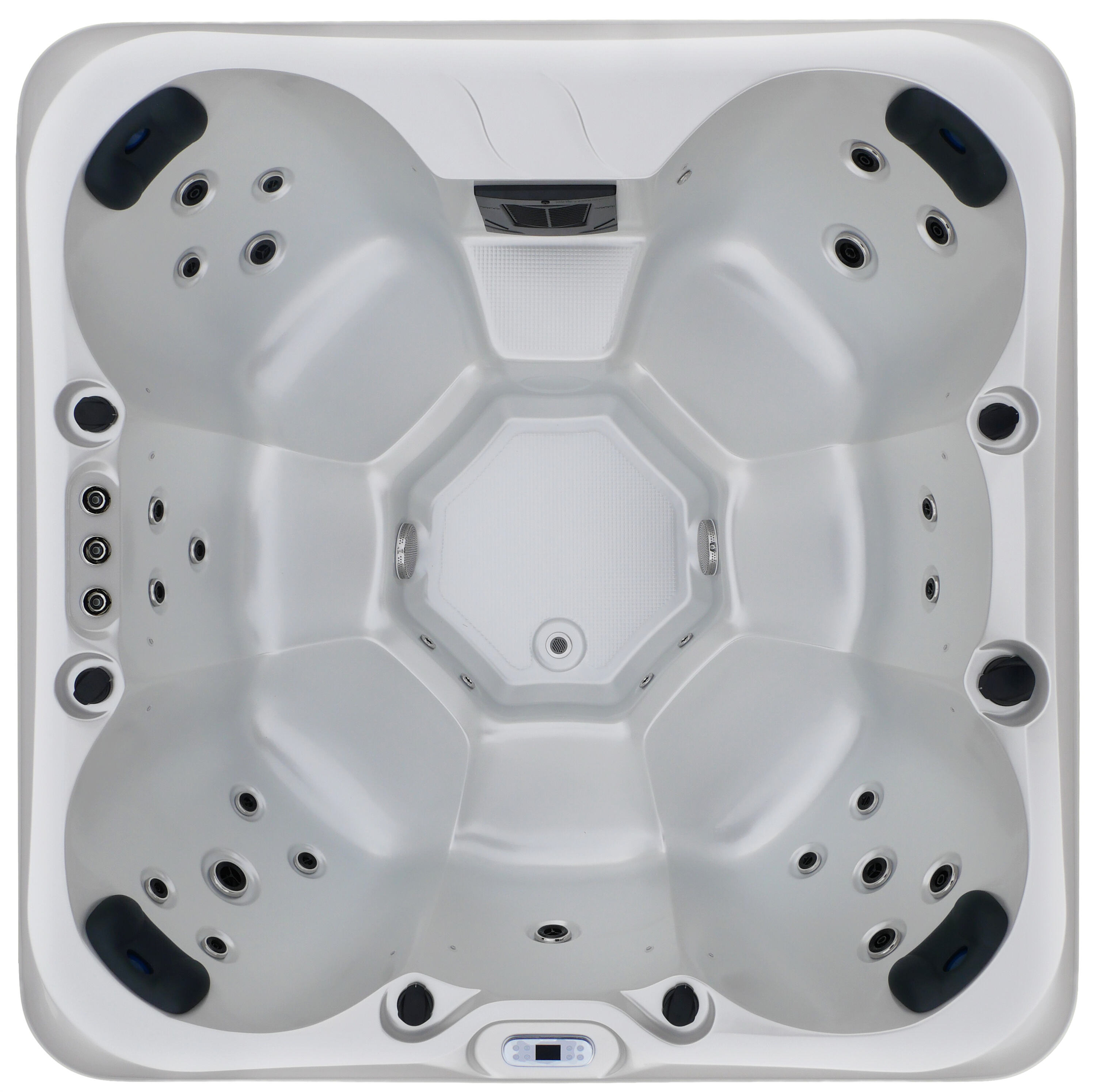
The total investment for installing a hot tub extends well beyond the sticker price. Five key components shape the final cost. First, the unit itself ranges from $3,000 to over $15,000 based on size and features. Site preparation—including grading, leveling, and building a concrete pad or reinforced deck—typically adds $500 to $2,500. Electrical work covers wiring, GFCI breakers, and possibly a panel upgrade, costing $300 to $2,800 depending on voltage and local code requirements. Permits vary by municipality but generally fall between $100 and $500. Finally, professional labor for crane delivery, placement, and final connections runs $300 to $1,500. Each component interacts—for example, a heavier unit requires a thicker slab, raising both site prep and labor costs.
Industry data indicates a realistic national benchmark of $1,500 to $6,500 for complete professional installation of a hot tub. This range excludes the cost of the hot tub itself and reflects the full scope of site work, electrical setup, permits, and labor. On the low end, a simple plug-and-play 110V unit placed on a pre-existing concrete patio requires minimal site prep and no major electrical upgrades. On the high end, an in-ground installation with extensive grading, a custom electrical panel upgrade, and complex landscaping can approach $6,500. Buyers should budget within this band to avoid surprises when obtaining quotes from contractors.
Bundling services—such as site preparation, electrical work, and professional delivery—can cut overall installation expenses by 18 to 22 percent. Many contractors offer package deals that include a concrete pad, basic electrical setup, and permit handling. These bundles streamline coordination, reduce per-service markups, and often include a warranty on the combined work. A homeowner who purchases a bundled package typically pays $1,200 to $3,500 for installation, compared to $1,500 to $6,500 when each service is sourced separately. The savings come from lower labor overhead and fewer mobilization fees. Before committing, verify that the bundle includes items you actually need and that the contractor is licensed and insured.
Attempting a do-it-yourself hot tub installation may seem cost-effective, but hidden costs quickly erase any perceived savings. A poorly poured concrete slab can crack under the weight of a filled tub, requiring a $500 to $1,500 replacement. Electrical mistakes—like using an undersized circuit or missing a GFCI—can lead to failed inspections, dangerous shocks, and fines. Code violations force expensive retrofits, with rewiring alone costing $800 to $2,000. Even minor errors, such as improper leveling, shorten the hot tub’s lifespan and void warranties. Professional installation, though pricier upfront, avoids these pitfalls and ensures compliance with safety and building codes—including NEC Article 680 standards for aquatic installations.
When installing a hot tub, choosing the right foundation directly impacts both your initial budget and long-term satisfaction. Three common options—concrete slab, prefab pad, and deck reinforcement—each offer distinct trade-offs in upfront cost, installation time, and return on investment.
A poured concrete slab is the most robust choice, typically costing $800–$1,500 and requiring 3–5 days for curing. It provides excellent stability and requires minimal maintenance, offering the highest long-term ROI for permanent installations. Prefab pads, made from high-density plastic or composite, cost $300–$600 and can be installed in one day without curing. They are portable and budget-friendly but may shift on soft soil over time. Deck reinforcement involves strengthening an existing deck with additional joists and supports, costing $500–$1,200 and taking 1–2 days. However, decks must be engineered to support at least 100 pounds per square foot for a hot tub. While cheaper upfront, deck reinforcement carries a higher risk if weight limits are miscalculated, potentially leading to costly repairs. For most homeowners, a concrete slab or prefab pad offers the best balance of cost, safety, and longevity.
Plug-and-play hot tubs offer the most affordable entry point for installing a hot tub, typically requiring only a standard outdoor GFCI outlet. While initial electrical costs range from $0 to $300, these 110V systems face significant limitations:
These units work best for smaller 2–4 person hot tubs in mild climates where rapid heating isn’t critical.
Larger hot tubs require 240V systems to deliver full performance, but this involves substantial electrical upgrades:
| Upgrade Component | Typical Cost Range | Purpose |
|---|---|---|
| GFCI Breaker | $100–$250 | Prevents electrocution in wet conditions |
| Weatherproof Conduit | $15–$30/ft | Protects wiring from environmental damage |
| Panel Expansion | $800–$2,500 | Adds capacity for 40–60A dedicated circuit |
These upgrades become non-negotiable when:
Professional installation ensures compliance with NEC Article 680 standards while avoiding the $1,500+ remediation costs common with DIY errors.
The national benchmark for professional hot tub installation is $1,500 to $6,500, excluding the cost of the hot tub itself.
Yes, bundling services such as site prep, electrical work, and delivery can reduce expenses by 18–22%.
DIY installation may lead to costly issues like slab failures, electrical non-compliance, and code violations, often negating any savings.
Concrete slabs and prefab pads offer the best balance of cost, safety, and durability. Deck reinforcement is more specialized and risk-prone.
Yes, for larger hot tubs or those exceeding 6-person capacity, a 240V system is recommended for full performance and code compliance.
 Hot News
2025-12-08
2025-12-07
2025-12-06

GUANGZHOU HONGXUANKAI provides professional import & export services for manufacturing and trading companies. Our customs clearance expertise and cross-border logistics ensure fast, compliant, cost-effective trade. Trusted by 100+ clients across Asia. Get a free consultation today.
WANGTING ROAD, HUADU DISTRICT, GUANGZHOU, CHINA
Copyright © GUANGZHOU HONGXUANKAI IMPORT & EXPORT CO., LIMITED | Privacy policy
 EN
EN